


What Is Kaparot?
Since late Talmudic times, it has been a widespread Jewish custom to perform kaparot in preparation for Yom Kippur. Kaparot (also spelled kapparot or kaporos) literally means “atonements,” just as Yom Kippur means “the Day of Atonement.”
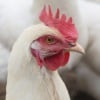
Kaparot consists of carefully (see instructions below) passing a chicken over one’s head three times while reciting the appropriate text. The chicken is then slaughtered in a humane fashion in accordance with the laws of kashrut. The chicken itself is discreetly donated to a charitable cause, such as a yeshiva or orphanage, where it is eaten just as any other chicken. Alternatively, the chicken is sold and its value donated.1
We ask of G‑d that if we were destined to be the recipients of harsh decrees in the new year, may they be transferred to this chicken in the merit of this mitzvah of charity.
If a chicken is unavailable, one may use any kosher fowl other than doves or pigeons which were offered as sacrifices in the Holy Temple. Some use a live kosher fish; others perform the entire rite with money, and then give the money—at least the value of a chicken—to charity.
It is important to keep in mind that the chicken is not an offering. Neither does performance of the ceremony alone atone for one’s sins. However, the ceremony does shake one up a little.
This is especially true today, when we rarely come face-to-face with the slaughter of animals to fill our tables. Holding a chicken and then seeing it slaughtered, contemplating that “there but for the grace of G‑d go I,” can have a profound effect on one’s attitude going into the day of Yom Kippur.
It also provides a valuable perspective on our position of privilege in G‑d’s world. Animals lived and died in order for us to live. It behooves us to live altruistically, honestly, devoutly and wisely, as only humans can.
When to Do Kaparot
In most Jewish communities, kaparot is organized at a designated location, with the proceeds going to charity. Live chickens are available for purchase, a shochet (an expert kosher slaughterer) is present, and the chickens are donated to a charitable organization. Speak to your rabbi to find out whether and where kaparot is being organized in your area.
Kaparot can be done any time during the Ten Days of Repentance (i.e. between Rosh Hashanah and Yom Kippur), but the ideal time is during the pre-dawn hours on the day preceding Yom Kippur, for a "thread of Divine kindness" prevails during those hours.
How Many Chickens?
A male takes a rooster; a female uses a hen. Ideally every individual should use their own chicken.
If, however, this is cost prohibitive, one fowl can be used for several individuals. So an entire family can do kaparot with two chickens—one rooster for all the males and one hen for all the females. In this event, they should do the kaparot together, not one after the other, for one cannot do kaparot on the same chicken twice.
A pregnant woman should perform kaparot with three chickens—two hens and a rooster. One hen for herself, and the other hen and rooster for the unborn child (if the gender is undetermined). If this is too expensive, one hen and one rooster will suffice (and if the fetus is female, she shares the hen with her mother).
How to Do Kaparot
- Click here for the English text of the kaparot. Click here for Hebrew and English text in printable PDF format (courtesy of Kehot Publication Society).
- Hold the chicken from below with both hands. If you are not adept at holding a chicken, best to ask someone else to do this. Improperly holding the chicken may be painful to the chicken, and may also render it no longer kosher by causing it serious harm.
- Say the first paragraph (“Children of man who sit in darkness…”).
- When reciting the beginning of the second paragraph, pass the chicken over your head in circular motions three times—once when saying, “This is my exchange,” again when saying “This is my substitute,” and again when saying, “This is my expiation.”
- Repeat the entire process another two times. (Passing the chicken over your head a total of nine times.)
- Bring the chicken to the shochet (kosher slaughterer), who slaughters the bird.
- Here’s your chance to fulfill a relatively rare biblical mitzvah—that of covering the blood of a slaughtered bird. Take a handful of earth (usually made available in the area) and recite the following blessing before covering the blood:
- Baruch atah Adonai Eloheinu melech ha-olam, asher kidishanu bemitzvotav vetzivanu al kisui hadam be-afar.
- (Blessed are You, L‑rd our G‑d, King of the universe, who has sanctified us with His commandments and commanded us concerning covering the blood with earth.).
- It is customary in many communities to tip the shochet for his service.
Even the smallest of children are traditionally brought to kaparot, and one of the parents passes the chicken over the child's head, while saying, “This is your exchange, this is your substitute, this is your expiation…”
If you are using fish or money for kaparot, just follow the same procedure (obviously without the kosher slaughterer), modifying the words of the text as appropriate.
Origin of Kaparot
The custom of performing kaparot with a chicken dates back to late Talmudic times. The earliest extant record specifically discussing the use of a chicken is a responsum from Rav Sheshna Gaon who lived in the early Geonic (post-Talmudic) period (approx. 660 C.E.). Rav Sheshna takes it for granted that his reader knows about the custom, a clear indication that it was widespread at the time.2 Some commentaries point to passages in the Talmud itself that allude to this custom.3
Why a Chicken?

Several reasons have been suggested for the choice of a chicken to perform the kaparot rite:
1. In Aramaic, a rooster is known as a gever. In Hebrew, a gever is a man. Thus we take a gever to atone for a gever.
2. A chicken is a commonly found fowl and relatively inexpensive.
3. It is not a species that was eligible to be offered as a sacrifice in the Holy Temple. This precludes the possibility that someone might erroneously conclude that the kaparot is an offering.
It is customary to use a white chicken, to recall the verse (Isaiah 1:18), "If your sins prove to be like crimson, they will become white as snow." In any event, one should not use a black chicken, as black is the color that represents divine severity and discipline. Nor should one use an obviously blemished chicken.
The Detractors
There have been some rabbis who criticized the custom of kaparot. Their primary concern was that kaparot may be a violation of darchei ha-Emori, the prohibition of following pagan practices. Perhaps the most well known of the detractors was Rabbi Yosef Karo, compiler of the Code of Jewish Law.4
Despite their concerns, we find that the majority of Jewish communities—even among the Sephardim, who normally would follow the rulings of Rabbi Yosef Karo5 —retained the custom.
The reasons for this is that, as Rabbi Moshe Isserles notes,6 the custom of kaparot with a chicken is in fact an ancient time-hallowed Jewish tradition.
Furthermore, many rabbis explain that the concern was not about the kaparot ritual itself, but limited to certain components of it—either that people went out of their way to obtain white chickens,7 or that they would throw the innards on the roofs.8
Additionally, Rabbi David ibn Zimra (Radbaz) points out that their objection was also only when the proceeds and/or chickens were not given to charity.9
Kaparot and Kindness to Animals
It is of utmost importance to treat the chickens humanely, and not to, G‑d forbid, cause them any pain or discomfort. Jewish law very clearly forbids causing any unnecessary pain to any of G‑d's creations. An unkind act like that would certainly be amplified on this day, the eve of the day when we beseech G‑d for—perhaps undeserved—kindness and mercy.
In fact, the Code of Jewish Law suggests that we take the innards and liver of the kaparot chickens and place them in an area where birds can feed off them. “It is proper to show mercy to the creatures on this day, so that in Heaven they should have mercy upon us [too].”10











So if you are spiritually transferring your sins onto a chicken and then giving the chicken for someone to eat, than spiritually, would not your sins then be transferred from the chicken to the person eating the chicken?
The se'ir la'azazel was sent into the desert and pushed over a cliff after the sins of Israel were placed upon it. The goat was not slaughtered and than given for people to eat. The sins placed on the goat were representative of giving Israel's sins to satan.
So wouldn't my sins being placed on the chicken be given over to the person eating it as Israel's sins were given to satan?
A person cannot sin by eating another's sins; one sins only by doing that which is forbidden to them. Kapparot are not meant to "carry off" the sin, but to atone for the person by reminding them of their own mortality. The sin offering in the Temple achieved a similar function, and it was eaten by the Kohanim (priests). By donating the slaughtered foul to charity, we achieve atonement through doing acts of kindness. The Kapparot ceremony places us in a mode of humility and of giving, and this is how sin is removed. Regarding the goat for Azazel (scapegoat), see our article "ACHAREI-KEDOSHIM: The Scapegoat."
By doing Kaparat, you aren't actually transferring your sins to the chicken, rather you are merely demonstrating that what is done to the chicken really should happen to us, and that will bring us to do teshuvah.
If you could just get rid of all your sins once a year by simply doing kaparat, why would anyone refrain from sinning(?) people would just sin as much as they wanted, no one would keep any of the mitzvos, do kaparat before Yom Kippur, and then go back to doing whatever they wanted(?)
Rabbi Brownstein -
Thank you for your response. Just to be clear - I understand how a person sins.
My question was not about if a person can sin by eating the chicken used in the Kapparot ceremony. My question was - if a person's sin's that are placed onto the chicken can be transferred "spiritually" and the sins "spiritually" effect the poor person who is eating the chicken?
I understand how the Kapparot ceremony works. But, wasn't the sin-offering the Kohanim had to perform a 'very specific - spiritually holy and pure ceremony' - ordained by Hashem Himself, which they needed to do in order for the atonement to be accepted and the sins voided - PRIOR to consuming the animal? So, that 'spiritually' the sins are gone and no longer on the animal?
Of course one cannot sin by eating another's sins, but the object of Kaparot being to escape from the consequences of one's sins by performing the ritual, doesn't it stand to reason that those consequences will have to be borne by the person receiving and eating the chicken?