


Not long ago, Long Island City was one of those places in New York where nobody but residents chose to hang out. As the westernmost section of Queens, connected to Manhattan by the Queensboro/59th Street Bridge, it resembled other industrialized urban neighborhoods—in Chicago, Cleveland, Detroit, Los Angeles, Philadelphia—where the working class lived because of lower housing costs and the proximity to jobs in factories and the city center.
But the 1990s saw significant redevelopment, and at the turn of the 21st century, much of the area was re-zoned for residential and commercial use. With new apartments, converted warehouse lofts, restaurants, art galleries and shops, it became one of those more reasonably priced, up-and-coming places, especially appealing to young professionals.
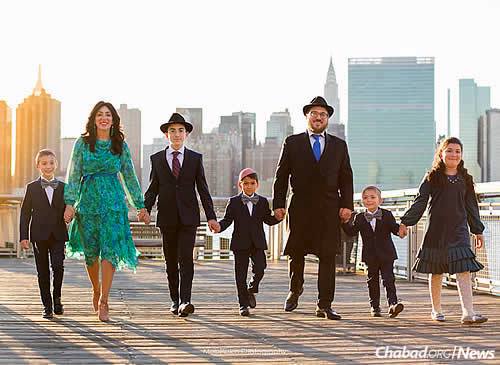
Rabbi Zev and Rivka Wineberg moved there in 2006, starting the JCC-Chabad of Long Island City/Astoria. They put programs into place for residents, but it was sometimes challenging to find a full table of guests for Shabbat dinner.
That’s where Guy Goldstein came in.
The 46-year-old from Israel always enjoyed Shabbat dinners with friends, often held at their respective synagogues. So a few years ago, he decided to try and move the idea closer to home—his new home in “L.I.C.”
He approached the Winebergs to suggest a program to attract more attendees. Shabbat meals were in place, but this would entail something more interactive on a regular basis—a program to get people sharing stories about their personal Jewish backgrounds and experiences. To help facilitate these Friday-night events, Goldstein, who runs a refrigeration company, bought a warmer the size of a cabinet—it can hold up to 10 trays of food—for the Winebergs to use.

It could have been wishful thinking.
But the meals—and the services beforehand—proved a hit. By the end of 2012, the Shabbat program had become a monthly feature at Chabad, and word of mouth boosted its reach. “It was a big thing. A lot of people started coming; people were actively looking for these dinners,” says Goldstein. They seemed to relish the chance to open up and build connections.
In addition to songs, games and stories, the latest iteration of what has been dubbed the “Get to Know You” Shabbat series started last fall. Each month, the Winebergs now ask a few people to volunteer to serve as “hosts,” offering an anecdote or presenting something of import between the first and main courses.
“People are excited about it because you get to hear from someone you already know and are acquainted with; you think you know them because you see them at dinners and other events. But you don’t really know them as well as you will after one of these dinners,” explains Rivka Wineberg. “We’re all friends, but this is a chance for us to get even closer while together in one space.”
The rabbi says they’ve gotten positive feedback from men and women from all ages and stages of Jewish life. “It gets people thinking,” he says. “When the hosts share their stories and their history, others in attendance start to think about their own initial connections to Judaism—what they grew up with, what they are reminded of. Ultimately, they become more consciously aware of why they’re there.”
One of first people to speak as part of the series was Robert Ayzin. He detailed a few artifacts from his grandfather, who came to the United States from Russia, and described how he learned about religion from him.
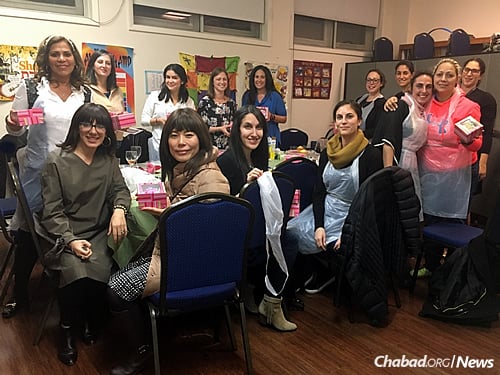
Another woman displayed a challah cover that’s been in her family for generations—something that really signifies Shabbat for them, he recalls. “And every time people see those things, even if they don’t have them in their possession, it reminds them of those types of family heirlooms and family traditions, and it puts a very personal touch to the Shabbat experience.”
‘Getting Personal’
For these meals, Rivka Wineberg orders food for an average of 50 people from Avi Moche and Erik Gross, who run a kosher catering company three blocks from the Chabad center.
Volunteers help get the tables ready—the five Wineberg children also pitch in—for Shabbat at the JCC-Chabad center, a rented first-floor space in a central location. “There’s always a core group of people and also new faces,” she says. “A lot of people who join us end up coming back.”
She says the dinners help foster a sense of community in what can otherwise be a transient neighborhood. Since the Chabad House opened 11 years ago, they have seen the area become more residential, with fleets of high-rise condos popping up. Filling them are young professionals, families with children and a rush of retirees—all wanting more affordable housing not far from Manhattan.
Chaya Aydel Adele Shtern moved to Long Island City long before it became popular. An artist and Yale graduate, she chose to settle in the area more than 30 years ago.
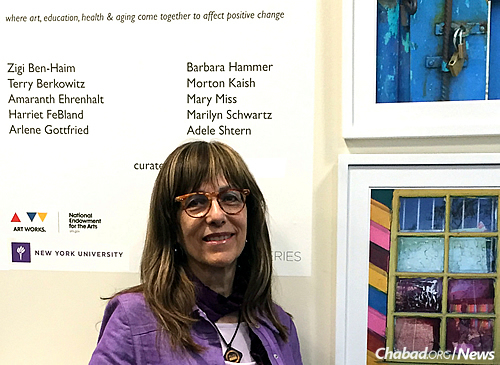
Today, gentrified L.I.C. is home to a diverse Jewish community, says Shtern, an art professor who tries to stop by Chabad weekly for Shabbat services. In January, she spoke at the monthly “Get to Know You” dinner.
“I found it a really good opportunity to review my Jewish journey. When I’ve heard other people speak, it’s always amazing to hear what their journeys have been about,” says the Montreal native. “It’s inspiring to hear how G‑d speaks to people and what happens.”
Rivkah Brown, 41, an interior designer from Florida who lives in Astoria, discovered the JCC-Chabad about five years ago. She takes part in challah bakes and other programs organized by the center. She, too, has been enjoying the “Get to Know You” series, saying she comes away having learned something new.
“I’ve been to a few,” says Brown, “and love getting personal with other Jews and hearing stories you can relate to—backgrounds you would never have known about people.”
Brown brought friends to a recent Shabbat meal and looks forward to inviting others in the near future. “These dinners create a warm environment that’s inspiring and fosters a feeling of community,” she affirms, “no matter where we come from.”





Join the Discussion