

As intense fighting continues in Ukraine, fears are growing over the impending winter and what that bodes for the country with a third of their energy sector compromised by recent attacks on power plants and critical infrastructure. Ukraine’s government has told refugees not to return until the spring and officials in Kiev warn that the coming winter may see the most intense round of fighting yet.
“The networks will not cope,” Ukraine’s deputy Prime Minister Iryna Vereshchuk warned starkly. “We need to survive the winter.”
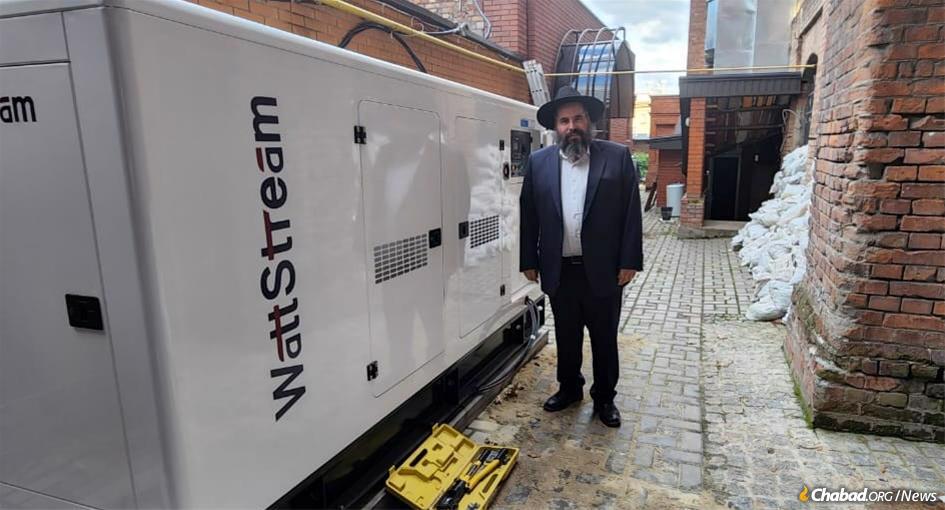
In response, the hundreds of staff members of the Jewish Relief Network Ukraine (JRNU), Chabad-Lubavitch’s boots-on-the-ground network, are stepping up their ongoing operations ahead of the winter. A major initiative of the group is procuring 49 commercial generators to heat community centers that will serve as heat shelters and 550 smaller generators for homes in desperate need. The figures are staggering: The larger generators can cost up to $50,000 each with stretched supply lines and demand far outstripping supply.
Judi Garrett, COO of the JRNU, says there’s a common misconception that for most civilians, the war is no longer an active threat. “That’s not the case. So many need our help.”
A Dreaded Winter Without Water or Electricity
Rabbi Shaul Horowitz, co-director of Chabad-Lubavitch of Vinnitsa in central Ukraine, knows too well what winter without electricity and heat means. Last winter, at the beginning of the war, a young boy from Mariupol passed through Vinnitsa, which has become a hub of refugees. “He had no water or electricity,” Horowitz told Chabad.org. “He showed me a crude piece of metal that he pulled out from his pocket, explaining that with this he broke ice and heated it in a bucket over the fire so he’d have water.” He had brought it with him “just in case.”
Horowitz reports that they’re currently experiencing half-days with no electricity. “Soon, the temperatures will drop below freezing, and we need heat. The only thing that we can do is purchase generators to heat our community centers—Chabad has two locations in the city—because without generators, it will be deadly.”
Chabad of Vinnitsa—and dozens of other Chabad centers across Ukraine—will open their doors to anyone seeking a warm spot, invariably saving many lives. “Everyone knows our address,” says Horowitz. “Now we need the generators.”
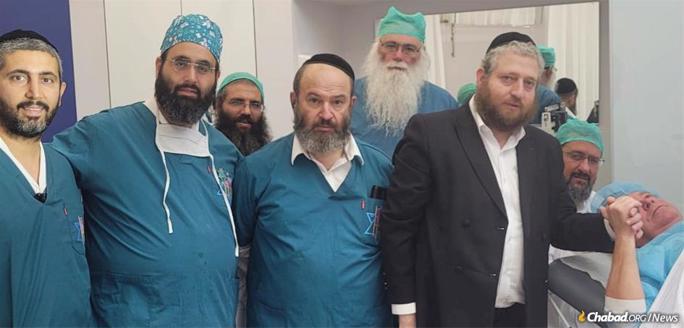
Recently recovered from a medical emergency over the High Holidays season where Horowitz had to be airlifted to Israel for surgery—leaving the community in the hands of three rabbinical students deployed from Chabad-Lubavitch headquarters in New York—the rabbi says he’s thankful to be standing on both feet, and he’s hit the ground running. “We’re giving out blankets, warm clothing, everything we can, before the winter comes,” he says.
But, he notes, Jewish life and celebration goes on: Just before Sukkot, a 70-year-old man had a brit and during Sukkot the community came together for festive dancing—interrupted by an air-raid siren. The man, Baruch Chazyin, watched a year ago as his son had a brit milah and pidyon haben, and felt that it was time for him to finally enter the Covenant of Abraham as well.

In the southwest, in the town of Sadhora, located in the Chernovtsy district, an area steeped in Chassidic history, lies the burial place of the holy Ruzhiner Rebbe, Rabbi Yisroel Friedman. Rabbi Menachem Glitzenstein, co-director of Chabad of Chernovtsy with his wife, Pnina, feels the inspiration of the holy tzaddik in the city. “On Friday (Oct. 28), the yahrzeit of the Ruzhiner, four men here were circumcised,” reports Glitzestein.
These circumcisions aren’t taking place by chance.
On Simchat Torah, the honor of chanting the verses preceding the hakafot are traditionally auctioned off to the highest bidders. But in times of war, a new tradition emerged: “Nobody has a job or money to spend. So the auction was not for money, but mitzvah resolutions,” explains Glitzenstein. “On Simchat Torah, these four men took upon themselves to have a brit milah.”
But as the holidays end and fall gives way to winter, Glitzenstein’s worries are mounting. He has been helping community members immigrate to Israel or Europe, but many cannot leave for all sorts of reasons. “People here are scared. The temperatures drop to minus 15, there’s no gas, and the electricity supply is unreliable. It’s going to be tough.”
When Chabad.org spoke with Chaya Wolff, co-director of Chabad of Odessa with her husband, Rabbi Avraham Wolff, the school she heads had just experienced a four-hour power outage. “No lights, no computers, no smart boards—we don’t have any street lamps in the city at night,” she says. “We need four commercial generators urgently. And there are only two available for purchase locally, at tens of thousands of dollars each.”
But, as Wolff notes, with enough funding, they can import generators from overseas, possibly from Romania or Moldova.
In Kharkov, Chabad-Lubavitch is working to ensure that friends and neighbors have what they need to keep warm.
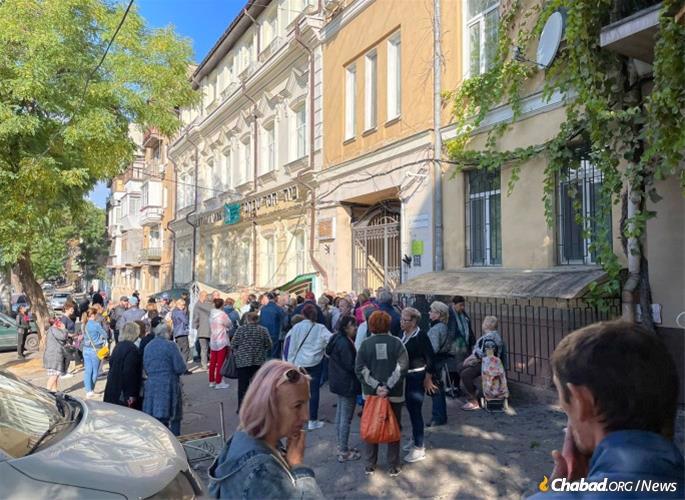
“We are giving hundreds of heaters and blankets to people who need them,” said Miriam Moskovitz, who along with her husband Rabbi Moshe Moskovitz, has been leading Chabad of Kharkov for some 30 years. They fear a long and brutal winter ahead. “We are helping people close up their windows and renovating windows that are broken and seal cracks around windows so that houses will be as warm as possible.”
Chabad is also working on boarding up windows and restoring the heat at the Ohr Avner Jewish Day School. Though school is up and running, classes remain online only. The windows at the school were broken as a result of the many rockets that landed in Kharkov during the early days of the war.
At the Chabad Choral Synagogue, which has been used as a shelter since the start of the war and from which Chabad organizes its many food distributions, and thanks to the help of the JRNU, generators have been set up to ensure the power remains on and they can continue their life-saving work even when the city grid goes down.
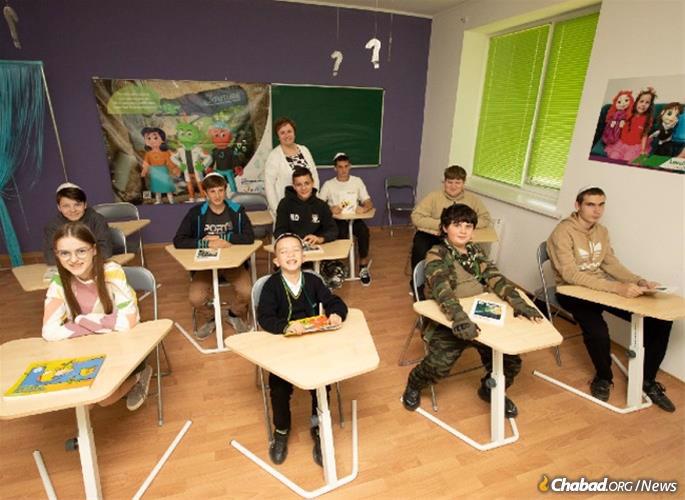
In Nikolaev, JRNU helped dig a 50-foot deep well after the city’s water supply was blown up, supplying clean, safe drinking and showering water for the community.
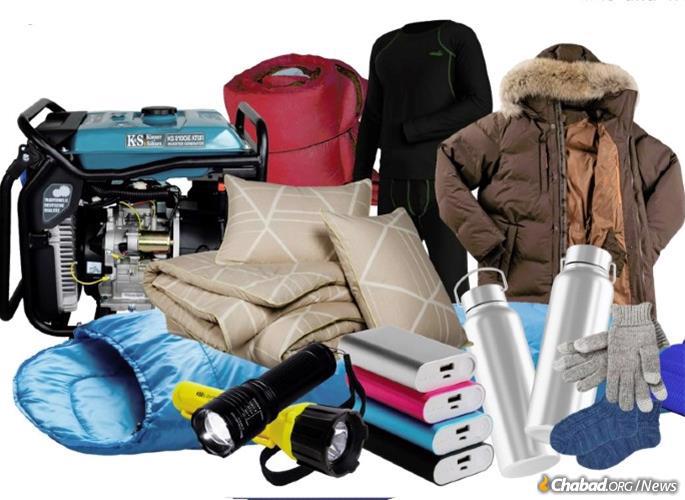
Garrett of the JRNU says that the urgency felt by overseas donors at the beginning of the war has partly dissipated, but the needs have never been more dire. JRNU is sending winter survival kits to at least 35,000 families across the country, with blankets, warm clothing, portable battery packs, flashlights, thermoses and utility-bill vouchers.
“People are sitting at home, anxious about how they will survive the winter. It will be a cold, difficult winter. Last year, we didn’t have this issue,” says Wolff. On a positive note, “a child was born in the community and had a brit last week. Life goes on, and may this horror soon be over.”
Donations to help the Jews of Ukraine can be made at the JRNU web site here.








Start a Discussion