

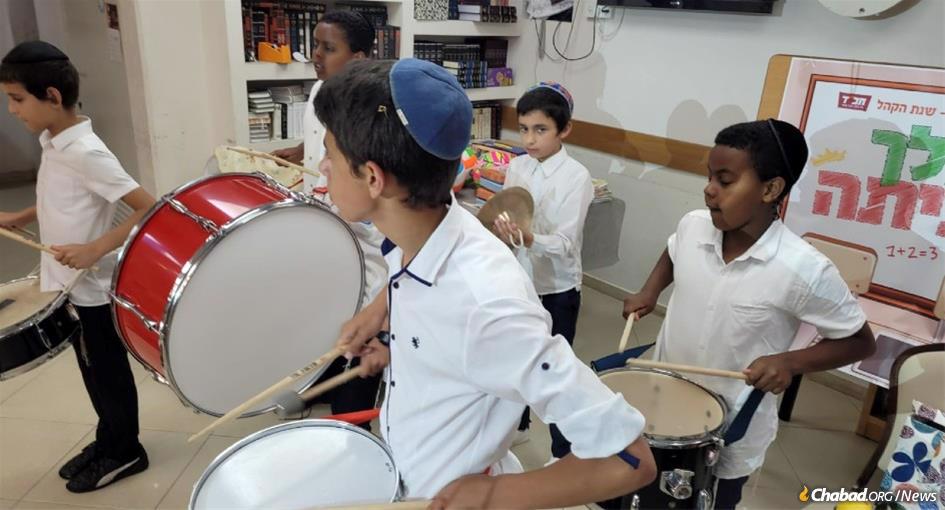
ASHKELON, Israel—It’s the third day of “Operation Shield and Arrow,” and children are engaged in activities and entertainment in the bomb shelters of the Chabad Houses of Ashkelon. While there are sounds of song and laughter, there are signs of anxiety on everyone’s faces.
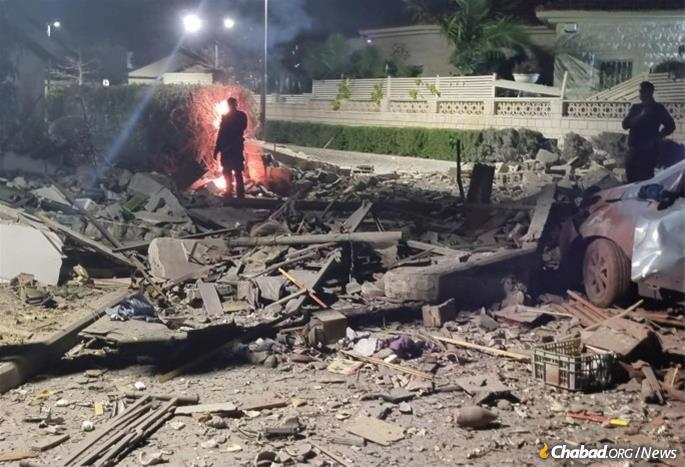
More than 800 rockets aimed at civilian centers in Israel have been launched by terrorists in Gaza over the last 36 hours. In Ashkelon, sirens have been ongoing, giving residents a 30-second warning to reach shelter—the approximate time it takes for a rocket launched from Gaza to reach the coastal city. With sirens so frequent, most residents prefer to stay in the shelters and only leave for short, urgent needs.
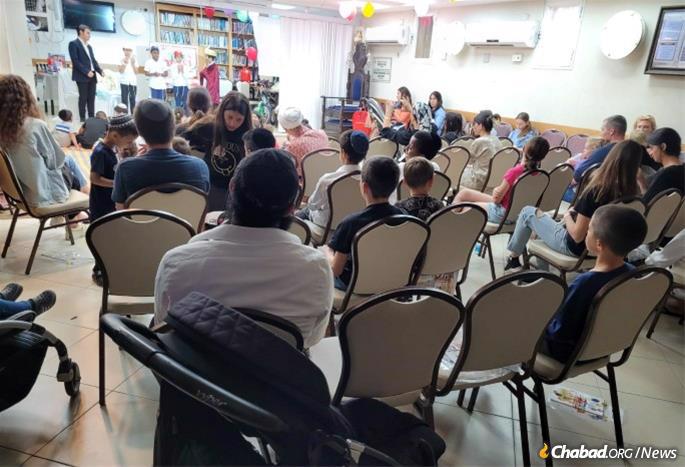
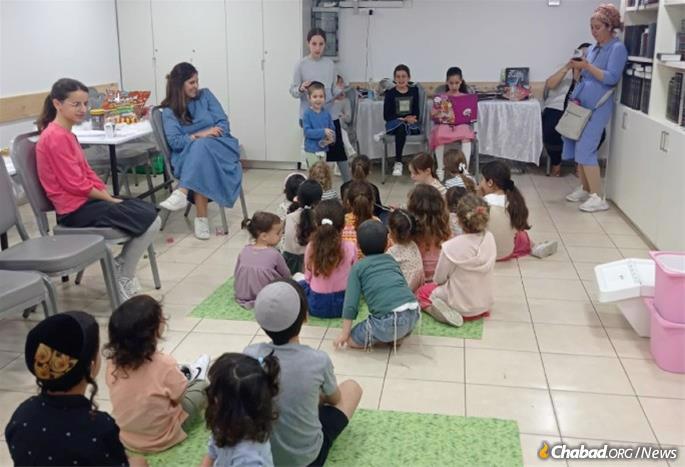
Chabad-Lubavitch of Ashkelon, directed by Rabbi Menachem M. and Yehudis Lieberman, was well-prepared for this crisis. Its network of 37 emissary couples swiftly mobilized as soon as the Israeli military operation commenced on the morning of Lag BaOmer. Lag BaOmer parades were transitioned to a nationwide online “parade,” which soon reached Zoom’s maximum capacity. Chabad centers promptly opened their bomb shelters, stocking them with essential supplies and offering a safe haven for children and their parents. In the shelters, children have been enjoying art projects, fun games and a show called “Class King,” performed by the children themselves.
In Ashkelon’s Neve Dekalim neighborhood, Rabbi Chaim Atias hosted an impromptu Lag BaOmer parade inside the Chabad House shelter—children took turns going up to a makeshift stage with their drums, signs, and chants of the 12 pesukim, or Torah verses. They then marched around the bomb shelter, exiting one door and walking the few steps to the shelter’s second door. It was a very minimized version of what had been planned, but still gave the children a feeling of empowerment and expression amidst the unpredictable.
“There’s nothing like Chabad!” wrote one parent, after forwarding a photo of the children relaxing in the bomb shelter to her local parents’ WhatsApp group.
Trained in First-Aid for Trauma
The Liebermans were sent to Ashkelon in 1976 by the Rebbe, Rabbi Menachem M. Schneerson, of righteous memory, to establish Chabad education activities in the coastal city. Since then, they’ve founded a local school network with more than 2,000 students, from daycare to classes for university students. More than 20 Chabad Houses serve the city’s 150,000 residents.
Ashkelon became a target of terrorist factions in Gaza after the Gush Katif evacuation, and in recent years has increasingly been taking the brunt of the impact during operations, along with the city of Sderot, which is just a single kilometer from the Gaza border. Facing this new challenge, the staff of Chabad in Ashkelon took trauma training with experts in the field.
Lieberman says that from his experience, an estimated 20 percent of the children will need recuperative therapy after the operation ends. After previous operations, he had set up a therapy first aid center, with the assistance of Bar-Ilan University.
“Trauma is something that builds up,” says Lieberman. “If it’s not dealt with immediately, it accumulates, and you don’t know at what point it will come out. So we do everything we can to address it, both in the moment, and as soon as the operation is over.”
“We had a senior psychologist attend a meeting of emissaries, and he asked what we do with the children,” he explained. “We told him that we have the kids give charity, say Psalms, and recite the 12 pesukim (Torah passages), all to create merit for G‑d to help the IDF and protect the Land of Israel,” the rabbi told Chabad.org.
“The psychologist told us that’s fantastic—we’re giving the children a sense of control of the situation, and helping them feel that they can do something,”continued Lieberman. “I told him that we’re not just giving them a sense of control—the kids' prayers are actually protecting all of Israel!”
Helping Residents Relocate, Including Refugees from Ukraine
Many Ashkelon residents don’t have bomb shelters in their homes, while others are not healthy enough to cope with wartime conditions. In response, Chabad emissaries and families in Ashkelon and in towns and cities around Israel have set up a network to evacuate people in need, find them a fitting place to relocate, and provide safe transportation to their temporary homes.
“This morning I received a message about an elderly woman who had previously experienced a traumatic fall while running to shelter,” said Lieberman. “Since the operation outbreak on Tuesday, she has been staying in a public bomb shelter with nothing but a mattress on the floor. We found someone to drive her to Jerusalem, where she is being hosted by kind volunteers. This is one of the many individual situations we are dealing with right now.”
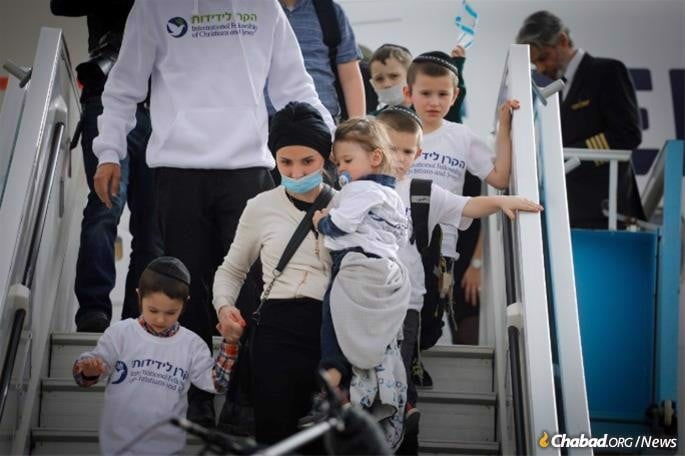
While Chabad of Ashkelon already has years of experience helping the local community under fire, there is one new community that has brought a different challenge.
During the war in Ukraine, they absorbed much of the Chabad community from Zhitomer, including many families and an orphanage headed by Rabbi Shlomo Wilhelm.
The Zhitomer orphans live in two large homes in Ashkelon and attend the Chabad of Ashkelon schools. The orphanage homes have onsite bomb shelters where the children were spending their day, dealing with a trauma similar to what they had previously escaped.
When the rocket attacks began, the children were evacuated from Ashkelon to the Ohr Simcha Children’s Home in Kfar Chabad, in central Israel.
“These children have gone through so much hardship and in the last year we have done everything to help them cope with the trauma and surround them with love and attention,” said Wilhelm
“We decided to take them to a place in the center of the country that will be quieter than in the south,” the rabbi continued. “The first place we contacted was Ohr Simcha, which the children have visited in the past and with which they are familiar. We tried not to arouse fear and anxiety. We told them we are leaving for a long trip. They know that there’s a tense security situation, but it’s an indirect awareness. They see it as a trip and a vacation from school. Unfortunately, our administrative staff already knows how to cope with situations such as this one. We are planning to stay here for a few days, hoping that the situation in the south will improve and we can return to our routine.”
Readers can support Chabad of Ashkelon’s relief efforts here.





Join the Discussion