

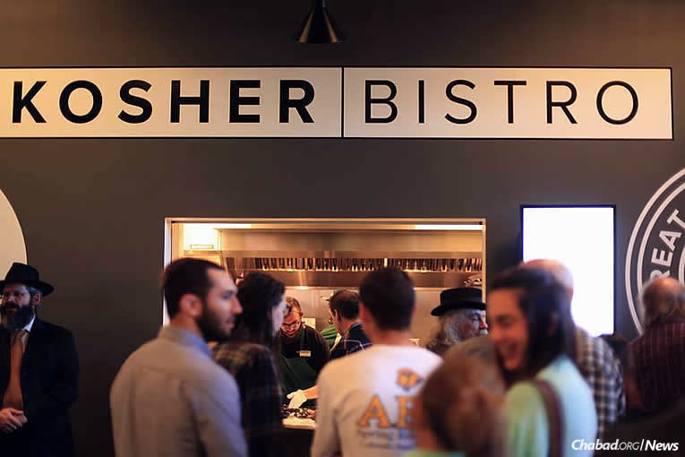
For some students at Colorado State University, the recently opened Kosher Bistro is simply another place on campus to pull up a chair and savor a bite to eat before heading off to class. But for Alex Ingber, who started keeping kosher in college, it’s “life-changing.”
The political-science major from Potomac, Md., can’t hide his enthusiasm when he describes the new development. “I’m used to making something in my apartment. This is so convenient when I study; I can stay on campus and eat. For me, it’s made a monumental difference in my life.”
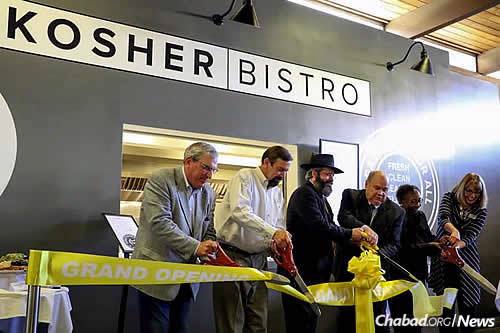
The bistro celebrated its opening on Oct. 10 at a school where only several hundred Jews attend and just a handful observe some level of kashrut. But Ingber, 21, says numbers aren’t the issue. “A lot of Jewish students know the importance of it and are now going out of their way to get a kosher meal. As my rabbi says, ‘If one Jew eats there, it’s worth it.’ ”
His rabbi is Yerachmiel Gorelik, who with his wife, Devorah Leah, has co-directed the Rohr Chabad Jewish Center of Northern Colorado & Colorado State University in Fort Collins since 2005.
As area Chabad-Lubavitch emissaries, they work with the general Jewish community in addition to running their roster of comprehensive campus activities. That means offering Shabbat meals and services, Jewish holiday events, Hebrew school and youth programs, bar and bat mitzvah classes, chaplaincy and visitations, Torah classes and women’s programs—albeit in a style reflecting a smaller, frontier-style community. And because Jews don’t tend to have family close by (like they do in swaths of the East and West coasts), on Passover, for instance, they get hundreds at their seders.
An eatery has been years in the making, says the Australian-bred rabbi. The nearest kosher restaurants are in Denver, an hour-and-a-half away, and in Boulder, about an hour away. The Goreliks host weekly Shabbat meals at the Chabad House for students and community members, but now they can hold lunch-and-learns and other programs at the bistro, too. (It also means that they occasionally get to eat out.)
“It’s doing pretty well, considering the context,” says Gorelik. “Word is getting out. They didn’t expect such good numbers; there are as many as 40 to 50 people at meals.”

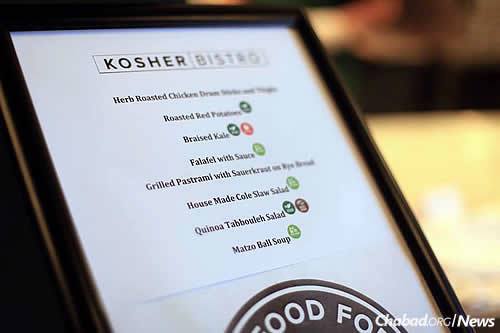
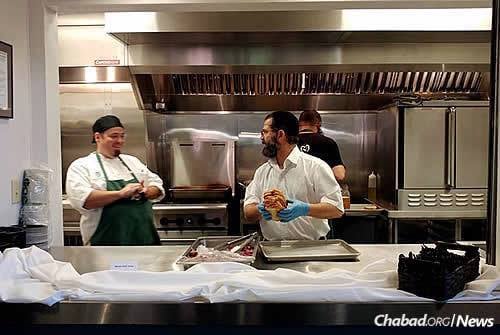
The menu features a wide range of fare, including a variety of meat, chicken and turkey dishes; roasts; salmon; matzah-ball soup; salads; sandwiches; burgers (students rave about the home-made burgers); and hot dogs. Israeli-type fare such as falafel and shawarma are in the works. A full-time mashgiach (kosher supervisor) operates on the premises.
The bistro joins a number of new campus choices, including a kosher food truck at Vanderbilt University, kosher food stand at the University of Maryland’s basketball arena and kosher dining option at the University of California, Berkeley.
‘Like You’re Eating Well’
Remy Kaskel just started her sophomore year at CSU after transferring from the University of Illinois at Urbana-Champaign. She came primarily for her major—wildlife conservation. Originally from Skokie, Ill., she also keeps kosher, living in a house off-campus.
The timing of the bistro, she says, is “perfect.”
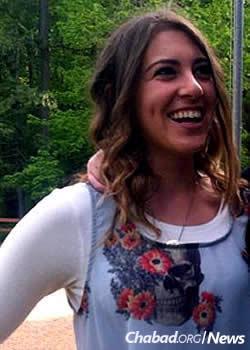
“I’m a college kid. I’m on a tight budget with a crazy schedule, and I don’t always eat the best, but now I have this choice,” says the 21-year-old. “The food looks good and tastes good, and it feels like you’re eating well. And it’s reasonably priced. I am so happy; just thrilled.”
She also notes the often challenging reality of keeping kosher in out-of-the-way places. “When I leave Chicago,” says Kaskel, “sometimes I don’t eat meat until Shabbat.”
Graduate physics student and teaching assistant Mathew Mehrian, 25, recently stopped eating non-kosher beef, so for him as well, the existence of the bistro is key. Now he gets to dig into those burgers, which he feels is far beyond the quality of those served at school facilities.
Mehrian, from the Denver area, earned a bachelor’s degree at George Washington University in Washington, D.C., and returned to Colorado for his master’s degree and Ph.D. He acknowledges that it’s harder to find people who “understand what I’m doing—the Jewish stuff.”
From a Sephardic family (his father is Persian and his mother is Israeli, of Iraqi descent), he has long been aware of kashrut. But Northern Colorado, he states, is nowhere near “the level of awareness on the East Coast.”

The advent of a kosher lunch-and-dinner place helps in that regard. “I get to talk about it; I get a lot of questions,” says Mehrian. “It’s a great way to help educate other students, and it’s nice to see the school supporting diversity on campus.”
He sits on the Chabad student board, and attends Shabbat dinners, holiday events and other programs. Back in D.C., he says, he didn’t have to be so active; Judaism was all around him. At CSU, he has made certain decisions, saying “the lack of people, of Jewish life here, has encouraged that. I feel more unique. I feel more ownership of it, I guess.”
‘A Minor Miracle’
The rabbi acknowledges that it’s a significant undertaking to meet the needs of such a small number of kosher consumers. (He calls it “a minor miracle,” expressing gratitude to the university for facilitating it.) But for those students and local community members—and for prospective families who tour the campus and visitors to the area—it’s a notable addition. “This is the first kosher establishment in Northern Colorado,” says Gorelik. “It’s all part of the Jewish community we’re building here.”
That’s something Ingber relates to. As vice president of Chabad’s student organization, he works to get students involved and helps set up for programs. He jokes that school takes up 40 percent of his time and Chabad, 60 percent. In fact, just as a recent survey—the Hertog study, a groundbreaking analysis of the Chabad-Lubavitch movement’s impact on university campuses throughout the United States—has supported, he credits Chabad for being a positive force at college and influencing his Jewish identity.
He recalls Chanukah a couple of years ago when he traveled with the rabbi to cities throughout Northern Colorado, helping organize public menorah-lightings. Ingber sometimes lit the candles or just set up elements of the event, working to provide a service for Jews and educate others.
“It was such an amazing time,” says the college senior, an experience he emphasized will stay with him for a while.
As for his meals at school, since keeping kosher he has had to pick through the local grocery for staples, and rely on the Goreliks to bring back meat and fish for him when they go to Denver for orders. Ingber cooks out of necessity, but he has a busy schedule, it’s time-consuming, and he’s not so into it at this point in his life. Now, he has options.
The bistro, he says, is a “game-changer” for students (and their parents), who can get excited about this aspect of Jewish life.
While Ingber plans on returning to the East Coast after graduation, he says going to CSU was one of the best decisions he’s made. Out in the West, in the mountains, clean air and spectacular vistas, “I became closer to Judaism. Not having so much here wound up boosting my Judaism.”
The Kosher Bistro is open for lunch Monday through Thursday, from 11:30 a.m. to 1:30 p.m.; and from 5 p.m. to 6:30 p.m. for dinner.








Join the Discussion